

Understanding the IELTS Academic Certificate: A Comprehensive Guide
The International English Language Testing System (IELTS) is an internationally recognized English language proficiency test for non-native English speakers. It is commonly accepted by universities, companies, and immigration authorities in many nations, particularly in the UK, Australia, Canada, and New Zealand. The IELTS Academic test is particularly created for trainees who want to study at the undergraduate or postgraduate levels in an English-speaking environment. This post offers a comprehensive overview of the IELTS Academic certificate, including its structure, scoring, and the benefits of getting this credential.
What is the IELTS Academic Test?
The IELTS Academic test is among the two main variations of the IELTS exam, the other being the IELTS General Training test. The Academic version is customized for individuals who prepare to obtain higher education or professional registration in an English-speaking country. The test assesses the candidate's capability to comprehend and use academic English in a range of contexts, including lectures, workshops, and written projects.
Structure of the IELTS Academic Test
The IELTS Academic test includes four areas: Listening, Reading, Writing, and Speaking. Each section is designed to examine different aspects of English language proficiency.
Listening (30 minutes)
- The Listening section consists of 4 recorded passages, varying from monologues to discussions, followed by 40 concerns. The passages are generally set in everyday social contexts and educational settings.
- Skills Assessed: Understanding essences, specific info, and the speaker's mindset or opinion.
Reading (60 minutes)
- The Reading area consists of 3 long texts, which may be detailed, factual, or discursive. The texts are drawn from books, journals, magazines, and papers.
- Abilities Assessed: Reading for gist, essences, detail, and understanding rational arguments.
Writing (60 minutes)
- The Writing section includes two tasks:
- Task 1: Candidates are asked to describe, summarize, or discuss info provided in a graph, table, chart, or diagram. They must write at least 150 words.
- Job 2: Candidates are asked to compose an essay in reaction to a perspective, argument, or issue. They should write at least 250 words.
- Abilities Assessed: Writing for a purpose, using appropriate tone and style, and arranging ideas coherently.
- The Writing section includes two tasks:
Speaking (11-14 minutes)
- The Speaking area is an in person interview with an inspector. It consists of 3 parts:
- Part 1: Introduction and interview (4-5 minutes)
- Part 2: Long turn (3-4 minutes), where the prospect speaks about an offered subject
- Part 3: Discussion (4-5 minutes), where the prospect talks about more abstract issues associated with the topic in Part 2
- Abilities Assessed: Speaking with complete confidence, utilizing a large range of vocabulary, and revealing and validating viewpoints.
- The Speaking area is an in person interview with an inspector. It consists of 3 parts:
Scoring and Band Scores
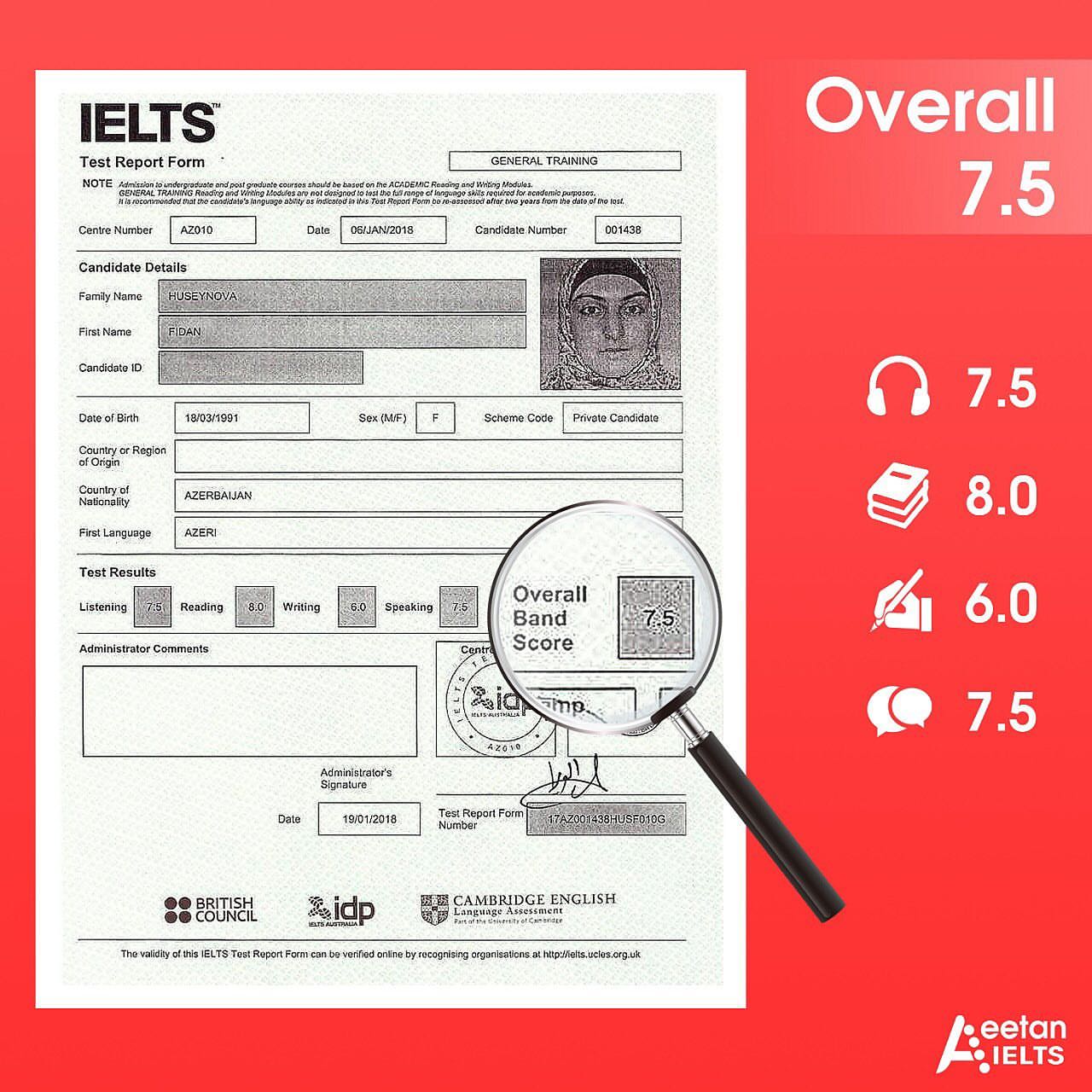
The IELTS Academic test is scored on a scale of 0 to 9, with 9 being the greatest. Each area (Listening, Reading, Writing, and Speaking) is scored separately, and the overall band score is the average of these 4 scores. Ball games are reported in half-band increments.
- Band 9: Expert user
- Band 8: Very great user
- Band 7: Good user
- Band 6: Competent user
- Band 5: Modest user
- Band 4: Limited user
- Band 3: Extremely limited user
- Band 2: Intermittent user
- Band 1: Non-user
- Band 0: Did not attempt the test
Advantages of the IELTS Academic Certificate
University Admissions:
- Many universities and colleges in English-speaking countries need an IELTS Academic certificate as proof of English proficiency. A great score can significantly enhance a trainee's application and increase their opportunities of approval.
Professional Registration:
- Certain professional bodies and regulative companies require an IELTS Academic certificate for registration or licensing. This is especially pertinent for fields such as medicine, law, and engineering.
Immigration:
- Many countries utilize the IELTS Academic test as part of their immigration processes. A high score can assist people fulfill the language requirements for visa applications and long-term residency.
Work Opportunities:
- An IELTS Academic certificate can be an important asset in the task market, particularly for positions that need strong English language skills. It demonstrates a candidate's capability to communicate successfully in an academic and professional context.
Regularly Asked Questions (FAQs)
Q1: How long is the IELTS Academic test?
- The total test duration is 2 hours and 45 minutes. The Listening section is 30 minutes, the Reading section is 60 minutes, the Writing section is 60 minutes, and the Speaking area is 11-14 minutes.
Q2: How is the IELTS Academic test scored?
- The test is scored on a scale of 0 to 9, with 9 being the highest. Each section (Listening, Reading, Writing, and Speaking) is scored separately, and the total band score is the average of these four scores.
Q3: How long are IELTS ratings legitimate?
- IELTS ratings are legitimate for two years from the date of the test. However, some institutions may have their own policies relating to the credibility of ratings.
Q4: Can I retake the IELTS Academic test?
- Yes, you can retake the IELTS Academic test as many times as you like. Nevertheless, there is a 90-day waiting duration between test attempts.
Q5: How do I prepare for the IELTS Academic test?
- There are numerous ways to prepare for the IELTS Academic test:
- Practice Tests: Take practice tests to acquaint yourself with the format and timing of the exam.
- Research study Materials: Use official IELTS study products, such as practice books and online resources.
- Language Classes: Consider registering in English language classes or hiring a tutor.
- Mock Interviews: Practice speaking with a pal or tutor to enhance your fluency and confidence.
Q6: How do I register for the IELTS Academic test?
- You can register for the IELTS Academic test through the main IELTS site or at an authorized test center. The registration process normally includes developing an account, selecting a test date and place, and paying the test fee.
The IELTS Academic certificate is an important credential for people who wish to study, work, or immigrate to an English-speaking nation. By understanding the structure of the test, the scoring system, and the benefits of getting this certificate, candidates can better prepare themselves for success. Whether you are a student wanting to pursue higher education or an expert seeking to advance your career, the IELTS Academic test is an important step towards accomplishing your goals.